

When Pullman Market opened at Pearl in April 2024, it introduced something different to the neighborhood. Pearl already had restaurants, cafes, bars, and its weekend Farmers Market. Pullman added a place designed as much for bringing food home as for eating it there.
Inside a 40,000 square foot former industrial building once used by Samuels Glass Company, Pullman combines a specialty grocer, whole animal butcher, bakery, produce department, prepared foods, and several dining concepts.
That mix gives it a role that extends beyond another place to make a reservation.
A Market Built Around Its Ingredients
Pullman puts a noticeable amount of attention into sourcing, particularly from Texas farms and ranches.
At the butcher counter, that means working directly with producers including Yonder Way Farm in Fayetteville, Peeler Farms and Startz Cattle Company in Floresville, Long Hill Wagyu in Luling, and La Babia Cattle Co. in Pleasanton. Pullman brings in whole animals rather than purchasing only individual cuts, then breaks them down in the market.
The same approach extends into produce and baking. The produce department sources seasonally from Texas growers, while the bakery makes breads, pastries, and tortillas with locally sourced regional flours, seeds, and grains. This fall, the produce department has highlighted apples from Top of Texas, pumpkins from Braune Farms, and mushrooms from Hi Fi Mycology.
When Pullman first opened, it carried goods from more than 150 suppliers across Texas. The goal was not simply to stock the market with local products, but to create longer relationships with the people growing and raising the food.
From the Market to the Restaurant
One of the more interesting parts of Pullman is that the grocery side and restaurant side are connected.
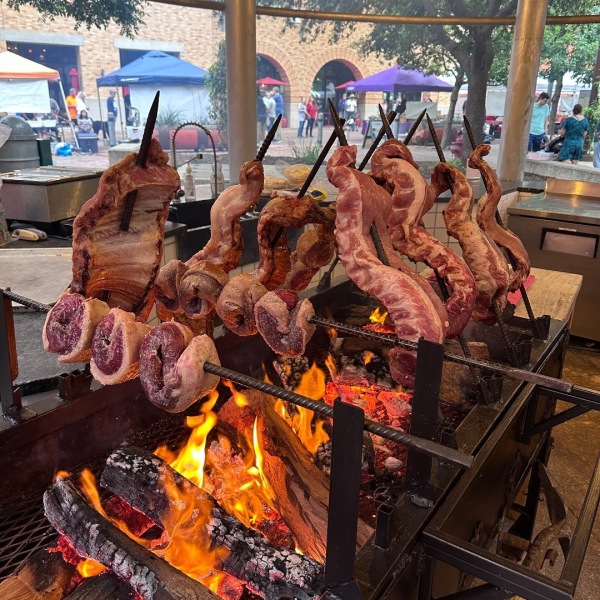
The butcher counter supplies meat to restaurants within the building, which means a shopper can take home some of the same Texas raised proteins being prepared by Pullman’s chefs. That includes Fife & Farro, where the menu centers on wood fired sourdough pizza and handmade heritage grain pasta, and Mezquite, which looks to the food traditions of the Sonoran region through grilled meats, flour tortillas, and cocktails. Isidore takes a broader Texas approach, with a menu shaped by the season and ingredients sourced through the market. That commitment to both cooking and sourcing earned the restaurant One Michelin Star and a Michelin Green Star in 2025, with Isidore retaining its Michelin Star in the 2026 Texas guide.
Then there is Nicosi, an intimate dessert bar built around sweet, acidic, bitter, and savory flavors, as well as the Mezcaleria, which brings an agave focused bar into the center of the market.
The relationship works in both directions. Pullman makes restaurant quality ingredients available to shoppers and also packages select dishes and sides from its restaurants to take home. Fresh pasta made in house with heritage grains offers another way to bring some of the cooking happening inside Pullman into your own kitchen.
More Than a Grocery Run
Pullman has also become a place to do more than shop or eat.
Its weekly programming makes use of different parts of the market. Fife & Farro hosts hands on pizza making classes, while another weekly class focuses on making ceviche. Thursdays bring sommelier led wine experiences at Isidore, and Wednesday mornings start with the Pullman Market Run Club along the river.
The calendar changes with the season. This October, Pullman has also hosted pumpkin carving on the patio and scheduled a beer release with Jester King, while larger past events have ranged from seafood markets to chef collaborations.
That variety makes Pullman easier to use on your own terms. One visit might be for groceries. Another might start with dinner or a class and end with a few things to take home.
Pullman Market as Part of Life at Cellars
For residents of Cellars at Pearl, Pullman becomes useful in very practical ways. Bread from the bakery can be breakfast the next morning. Seasonal produce can shape dinner. A stop at the butcher counter can prepare the table for friends, while prepared foods can simplify an evening at home.
Those small routines create a more direct relationship between Cellars and the neighborhood around it. Pearl is not only something residents step outside to experience. Parts of it can become woven into life at home.
That balance suits Cellars, where private residential spaces sit within one of Pearl’s most active areas. Pullman adds another dimension to that experience by making the neighborhood's food culture part of cooking, gathering, and eating at home.
In a place known for dining out, Pullman has also made space for the meals that happen at home.