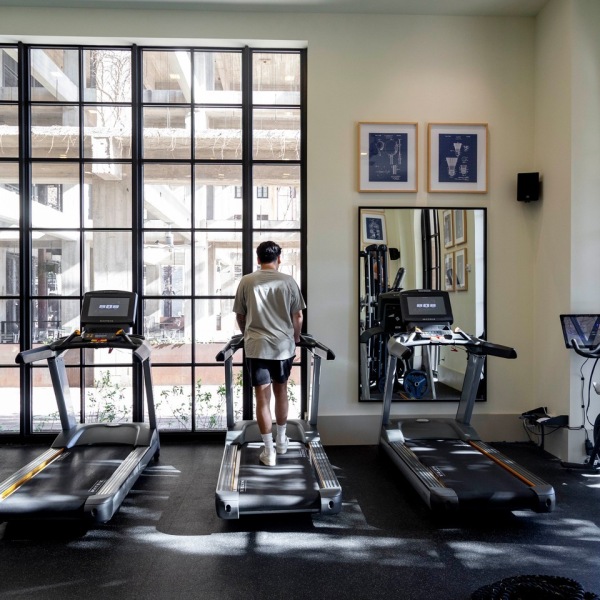






Pearl has always been a neighborhood defined by transformation, from its origins as the site of the Pearl Brewing Company in 1883 to the vibrant mixed-use plaza it is today. In the heart of this evolution sits Cellars at Pearl, where design and intention meet in every detail.
But what makes the architecture of Cellars distinctive isn’t just how it looks, it’s how it feels: rooted deeply in place, reflective of community history, and shaped for everyday life.
Built on Brewing
When architects at Three: Living Architecture and Don B. McDonald, AIA, took on the design of Cellars, their goal wasn’t to transplant a generic city building into San Antonio. Instead, they wanted to make something that spoke to this city (and to Pearl) at a deeper level.
Cellars replaced a 1950s warehouse that had been used for beer storage during Pearl Brewery’s operating years. For the architects, the goal was clear: create a new building with the depth of character you typically only find in older structures to honor the history and stories of the location’s past.
Two architectural languages that meet in the middle
One of the most intentional aspects of Cellars’ architecture is its dual identity. Architect Don B. McDonald describes Cellars as two sections joined at a pivotal point: one side composed in a more traditional style, the other leaning more industrial.
That intersection is the point. It mirrors Pearl itself: historic bones and modern reinvention, side by side.
Traditional materials and detailing (like cast stone and latticework) speak to a classic architectural language. The industrial elements (steel and solid massing) echo the raw energy of the old brewing campus. Together they create a building that’s at once distinctly local and timeless.
Materials That Tell a Story
The architectural choice of materials at Cellars further reinforces its rooted identity.
From brick and stone to cast elements and steel doors, materials were selected not just for durability, but for connection to the South Texas climate, history, and aesthetic vocabulary.
Rather than mimic historic details verbatim, McDonald’s strategy was to let regional architectural vernacular inform the design without resorting to literal historic replication. In doing so, the building feels as if it belongs: like it has always been part of Pearl’s story.
This intentionality shows up in subtle ways:
Brick tones that relate to local masonry
Steel details that recall industrial heritage
Ground floor community spaces made of native stone, mission tile, reclaimed brick and hardwood longleaf pine floors salvaged in Indianola.
Designed for Living, Not Just Looking
One of the most profound differences between Cellars and more conventional multi-family design is how architecture supports living itself.
There’s a balance between the exterior and interior worlds, between activity and calm. The architecture acknowledges both the lively energy of Pearl’s public realm, and the need for privacy and refinement in everyday life
This results in spaces that feel accessible, not imposing; rooms that feel warm, not branded.
Where other buildings might broadcast grandeur, Cellars quietly focuses on quality and intention, much like the neighborhood around it. Residents walk out into Pearl, a plaza full of culture, and walk back into a building that feels comfortable, steady, and thoughtfully composed.
More Than a Building, A Living Place
At its core, the architecture of Cellars at Pearl is about relationship.
It speaks to:
Pearl’s brewing past
San Antonio’s architectural heritage
The rhythm of daily life
The pulse of a changing downtown
Rather than standing apart, Cellars participates in the ongoing narrative of its neighborhood. It is a building designed for living in history, inhabiting culture, and being part of what’s next.
If you’re curious about how thoughtful design shapes everyday life in unexpected ways, we’d love to show you more.
Learn more about Cellars at Pearl architecture and the vision behind our residences.